
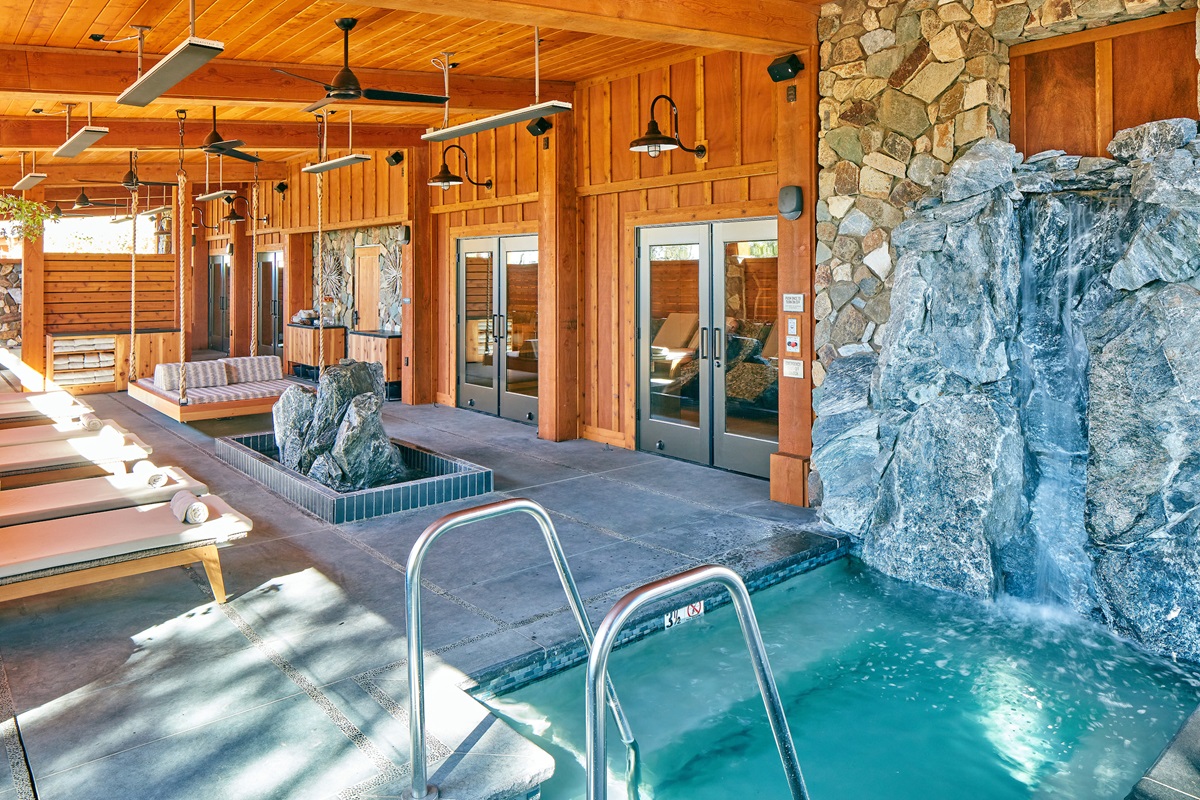
Why small spas are harder than big ones
A big hotel spa can hide a few mediocre floor zones. The square footage absorbs them. A guest crossing thirty feet of mixed-temperature tile barely registers the cold spot near the door.
A 1,500-square-foot wellness suite has nowhere to hide. Every transition (from the treatment-room threshold to the wet-area floor to the lounge) is a direct sensation. The smaller the space, the more the floor temperature is the experience.
That’s why we tend to recommend whole-suite radiant for commercial spas under 5,000 square feet, even when the budget feels tight. The cost per square foot of self-regulating element is largely independent of installation size; what scales is the impact on the guest experience, which trends inversely with floor area.
In a small spa, the floor is the mood. Everything else is decoration on top of it.
What we put in at Rush Creek
The Rush Creek install runs self-regulating polymer element under the tile and stone surfaces across the treatment rooms and adjacent corridor. The element sits in thinset, beneath the finish floor, and is wired to a low-voltage transformer with a wall-mount thermostat per zone. The whole system is invisible once the grout cures.
Because the polymer is self-regulating, the elements modulate output based on local floor temperature. Where a rug or massage table sits on the tile, the element underneath throttles down automatically. No surface hot spots, no wear on the rug, no thermostat gymnastics from the spa manager.
Why blower noise matters more here
A spa is engineered for stillness. Forced-air heat (even high-end variable-speed systems) introduces a low-frequency mechanical hum that competes with the music and the silence the music is designed around. Radiant has no moving parts; the only sound is whatever the spa designer wanted you to hear.
For wellness operators, that’s not a luxury feature. It’s the basic precondition of the experience they’re selling. A guest who notices the HVAC has stopped relaxing.
Where this leaves smaller commercial buyers
The lesson from Rush Creek isn’t that radiant is for spas. It’s that radiant is for any commercial space where the floor itself is part of the product: wellness, boutique fitness, high-end retail with fitting rooms, medical procedure rooms, hotel guest baths.
If you’re a developer or operator evaluating a smaller commercial floor heat install: the ROI math is different than at hotel scale, and it almost always pencils out faster. The complaint reduction alone (colder-floor reviews, blower-noise reviews, draft-from-the-vents reviews) pays the install back through guest retention, not through energy savings.
That’s the conversation we end up having with most small-spa clients. The energy story is fine. The guest-experience story is the one that closes the deal.






Leave A Comment